Belgisch Congo Belge
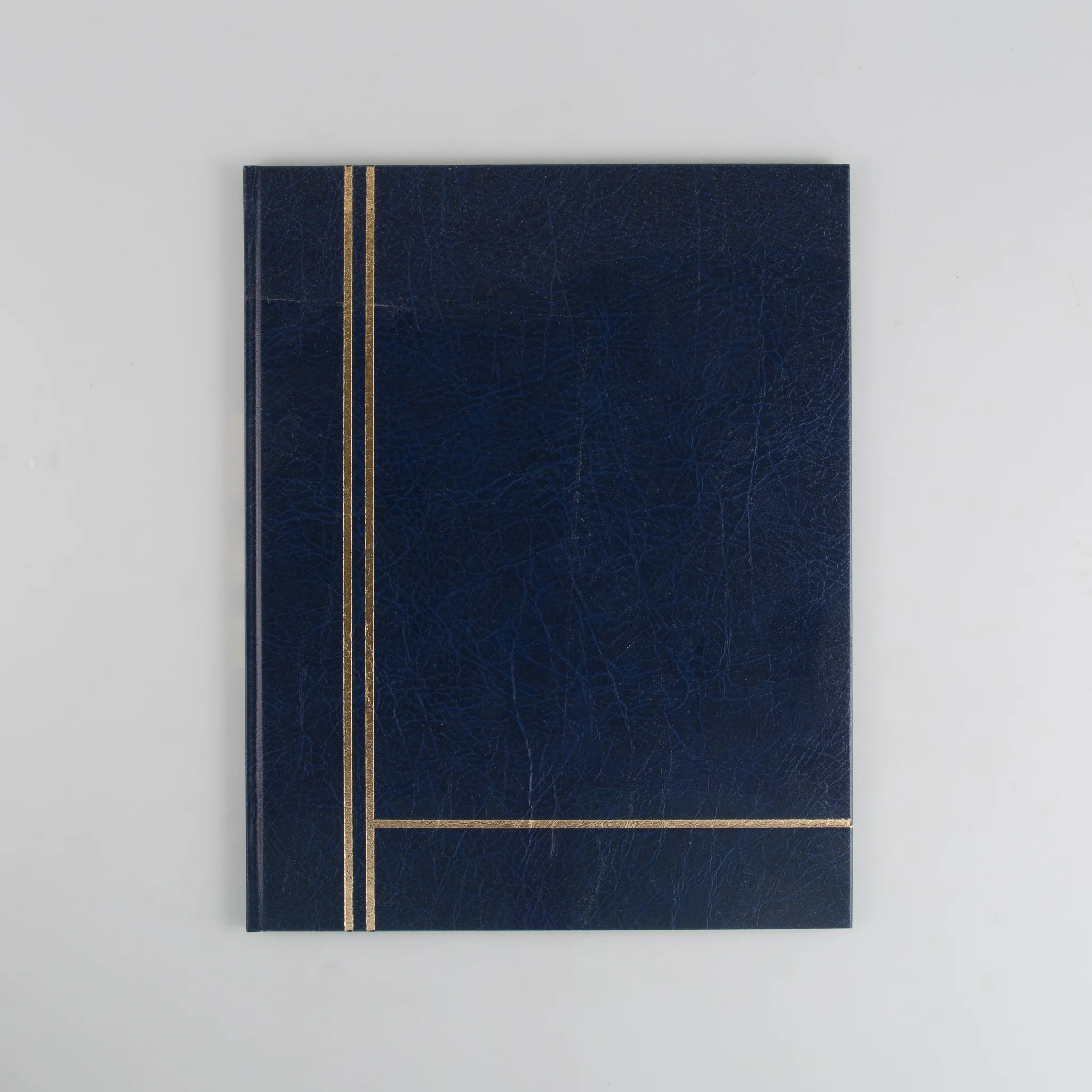
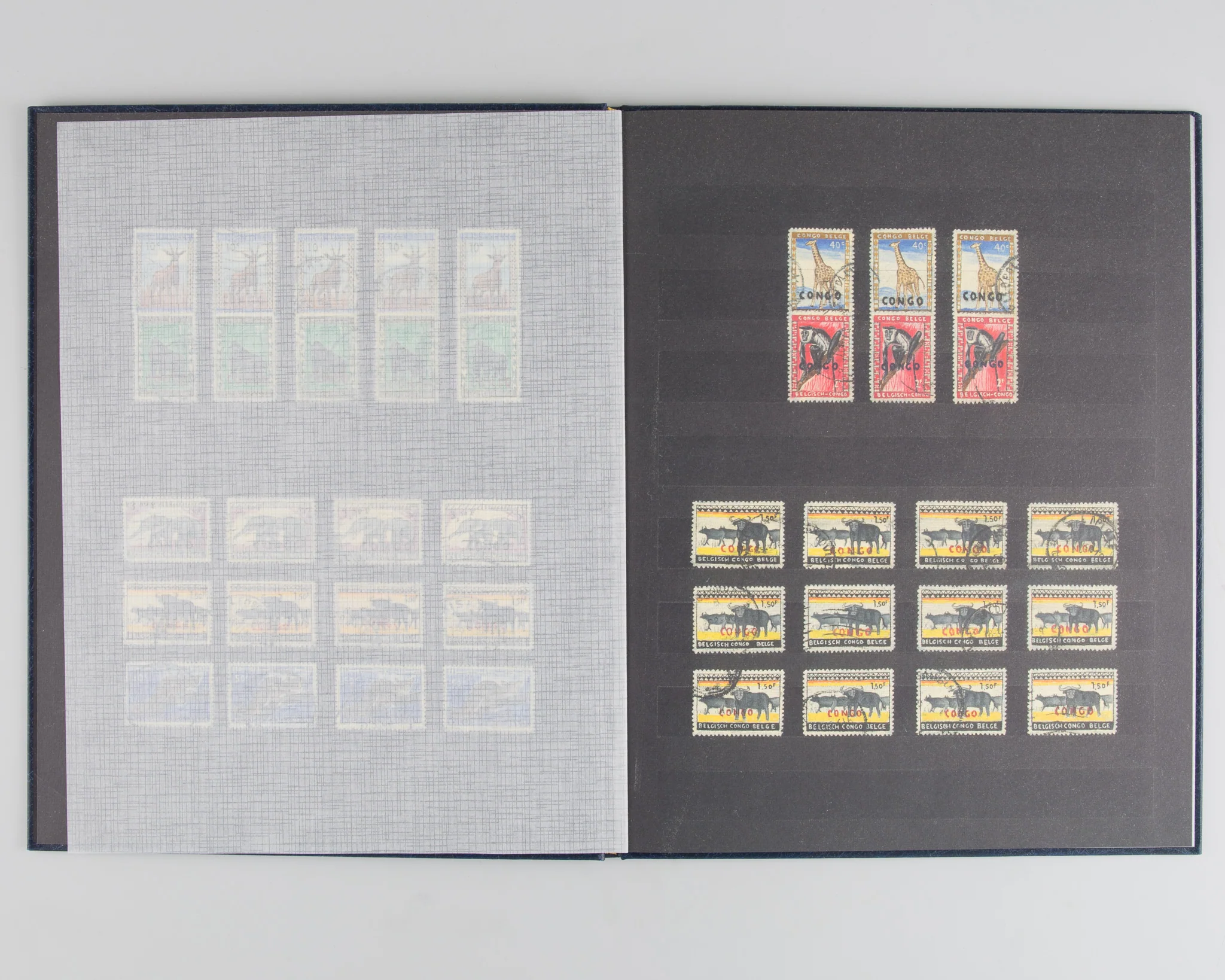
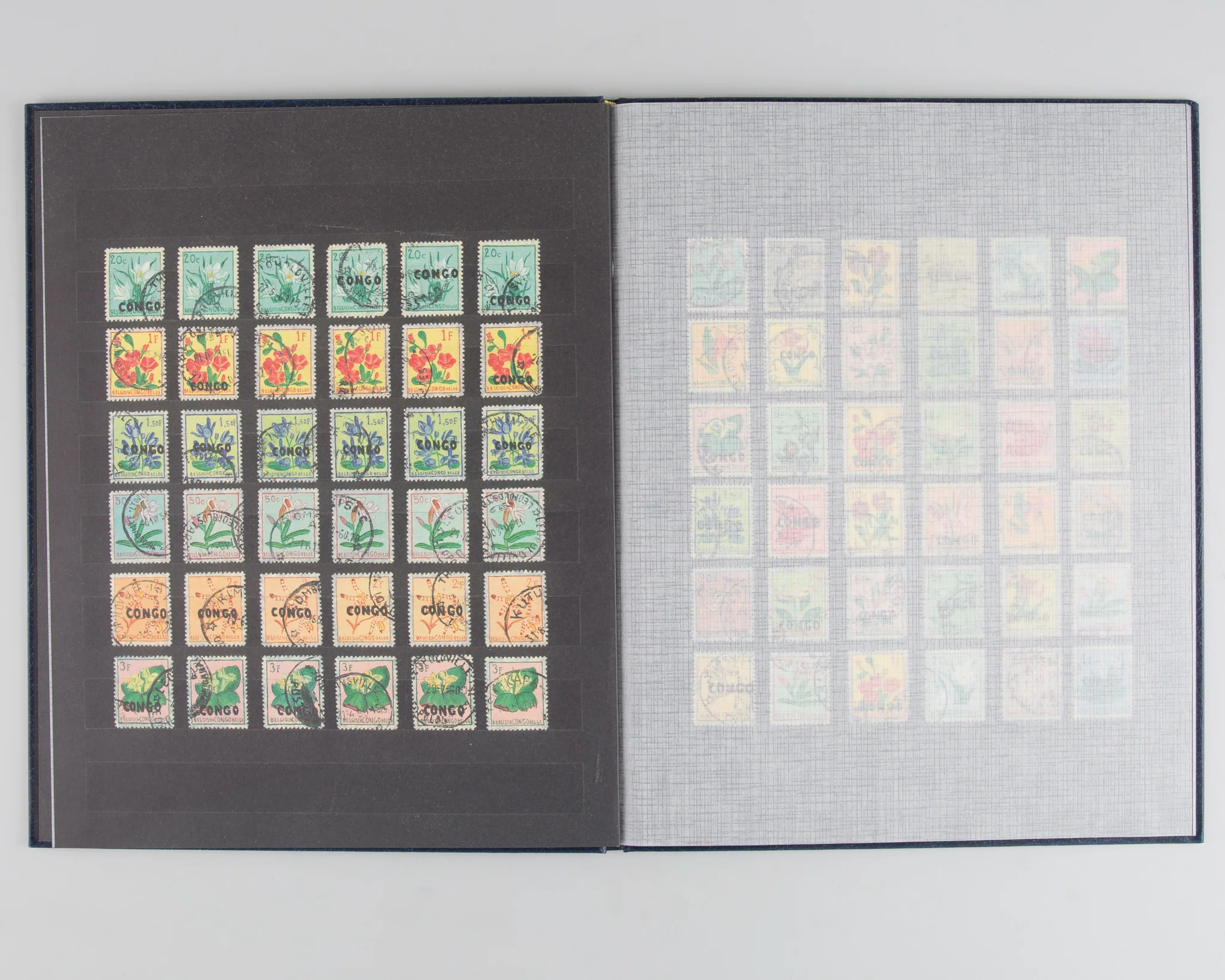
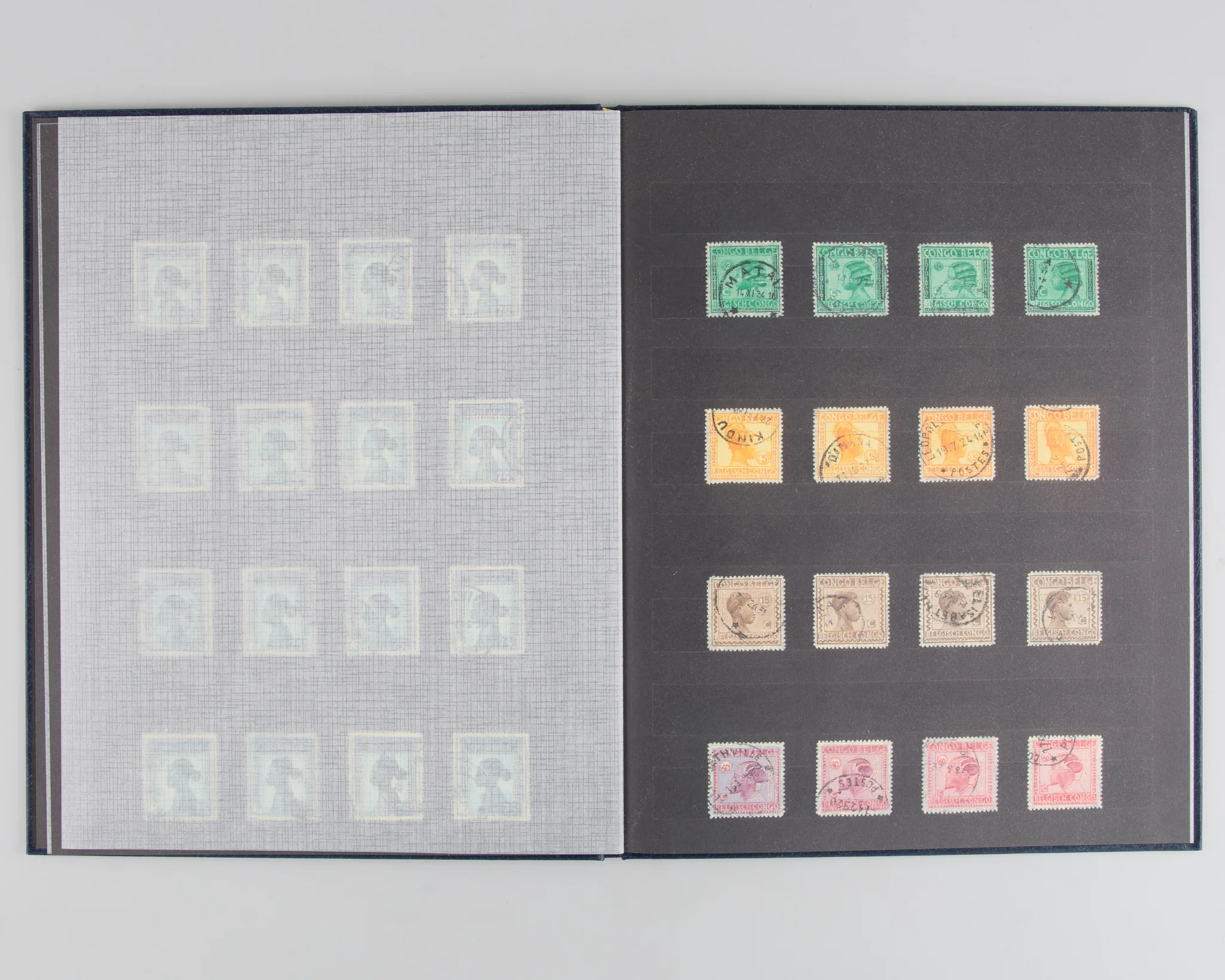
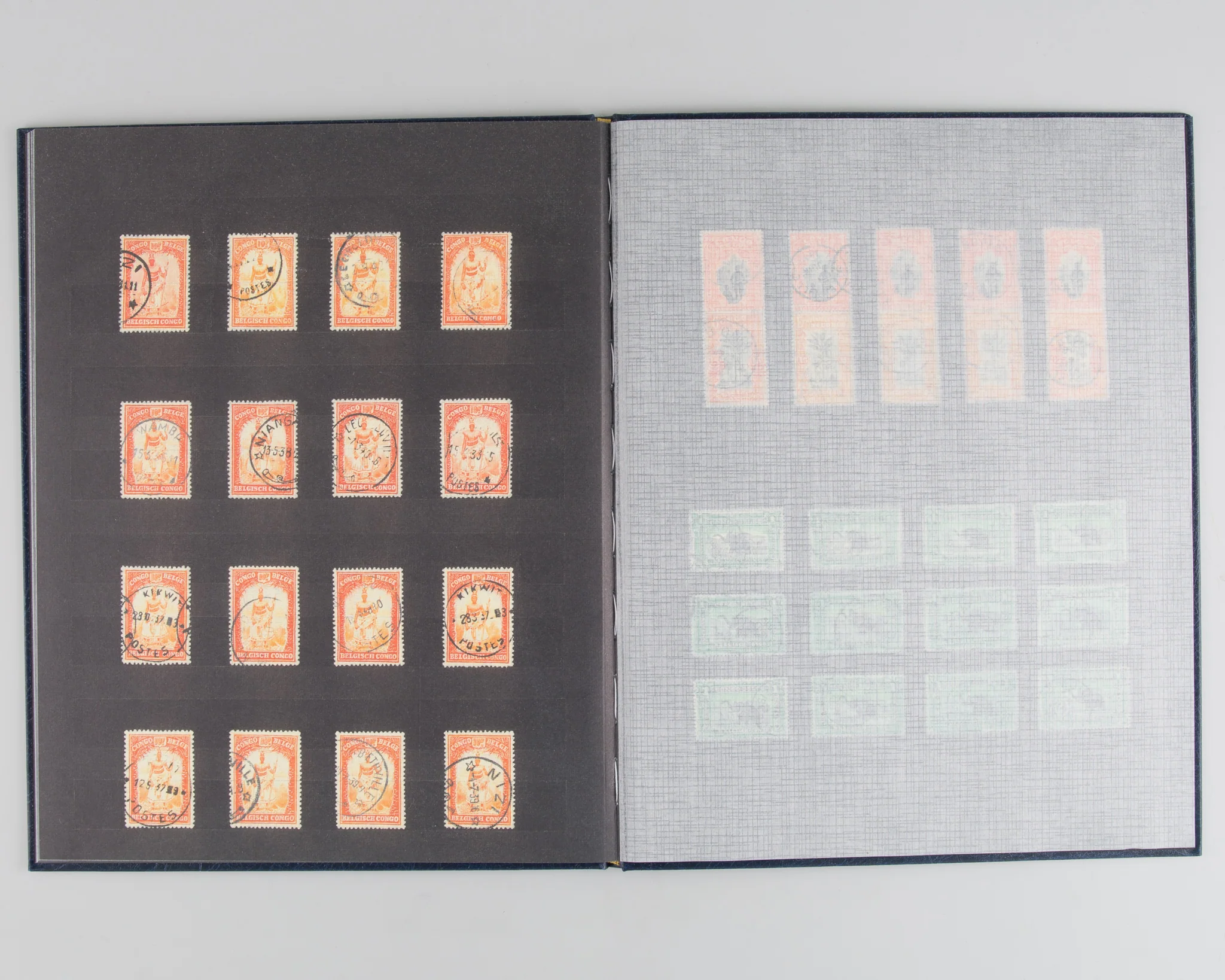
Why copy an album of postage stamps from the former Belgian Congo, page after page, stamp after stamp, and so precisely in terms of dimensions, illustrations and colours? Despite the initial confusion about Tuur and Flup Marinus’ project, when confronted by the materiality it soon becomes clear that there’s something interesting going on here. We see perfectly reproduced sheets; sets of exotic stamps in soft hues, protected by a transparent strip of varnish, and framed by an intrusive black background. Go on looking and this painterly appropriation becomes the magnifying glass and the mirror which unmask the colonial rhetoric.
When we look at colonial collections some 60 years after decolonization, we are struck first and foremost by what is missing in those collections: the real world of colonial subjects and their relationships with Belgians (and other Westerners) and the structural inequalities between the two categories which made the passion for collecting possible.
In some of his best stories Jorge Luis Borges showed the absurdity of attempts to create an imaginary world which corresponds fully to the reality or even to another imaginary world, such as Miguel de Cervantes’ Don Quixote. Flup and Tuur Marinus’ artwork does something similar: the patience and diligence with which they toiled to create it reminds us how absurd it was to try and collect the complete colonial world through collections and by extension how absurd it was to try and control and dominate politically an area as large as Western Europe through colonial rule. (Bambi Ceuppens)
Belgisch Congo Belge by Tuur & Flup Marinus
Original: $27.18
-65%$27.18
$9.51More Images
Belgisch Congo Belge
Why copy an album of postage stamps from the former Belgian Congo, page after page, stamp after stamp, and so precisely in terms of dimensions, illustrations and colours? Despite the initial confusion about Tuur and Flup Marinus’ project, when confronted by the materiality it soon becomes clear that there’s something interesting going on here. We see perfectly reproduced sheets; sets of exotic stamps in soft hues, protected by a transparent strip of varnish, and framed by an intrusive black background. Go on looking and this painterly appropriation becomes the magnifying glass and the mirror which unmask the colonial rhetoric.
When we look at colonial collections some 60 years after decolonization, we are struck first and foremost by what is missing in those collections: the real world of colonial subjects and their relationships with Belgians (and other Westerners) and the structural inequalities between the two categories which made the passion for collecting possible.
In some of his best stories Jorge Luis Borges showed the absurdity of attempts to create an imaginary world which corresponds fully to the reality or even to another imaginary world, such as Miguel de Cervantes’ Don Quixote. Flup and Tuur Marinus’ artwork does something similar: the patience and diligence with which they toiled to create it reminds us how absurd it was to try and collect the complete colonial world through collections and by extension how absurd it was to try and control and dominate politically an area as large as Western Europe through colonial rule. (Bambi Ceuppens)
Belgisch Congo Belge by Tuur & Flup Marinus
Product Information
Product Information
Shipping & Returns
Shipping & Returns
Description
Why copy an album of postage stamps from the former Belgian Congo, page after page, stamp after stamp, and so precisely in terms of dimensions, illustrations and colours? Despite the initial confusion about Tuur and Flup Marinus’ project, when confronted by the materiality it soon becomes clear that there’s something interesting going on here. We see perfectly reproduced sheets; sets of exotic stamps in soft hues, protected by a transparent strip of varnish, and framed by an intrusive black background. Go on looking and this painterly appropriation becomes the magnifying glass and the mirror which unmask the colonial rhetoric.
When we look at colonial collections some 60 years after decolonization, we are struck first and foremost by what is missing in those collections: the real world of colonial subjects and their relationships with Belgians (and other Westerners) and the structural inequalities between the two categories which made the passion for collecting possible.
In some of his best stories Jorge Luis Borges showed the absurdity of attempts to create an imaginary world which corresponds fully to the reality or even to another imaginary world, such as Miguel de Cervantes’ Don Quixote. Flup and Tuur Marinus’ artwork does something similar: the patience and diligence with which they toiled to create it reminds us how absurd it was to try and collect the complete colonial world through collections and by extension how absurd it was to try and control and dominate politically an area as large as Western Europe through colonial rule. (Bambi Ceuppens)
Belgisch Congo Belge by Tuur & Flup Marinus